Equine Form to Football Fields: Translating Daily Racing Selections into Layered Soccer Accumulator Systems
Written by Zoe Schmitz · Sep 13, 2026

Equine Form to Football Fields: Translating Daily Racing Selections into Layered Soccer Accumulator Systems
Observers note that bettors increasingly examine methods for transferring structured approaches from horse racing selections into football forecasting frameworks, particularly when constructing multi-leg accumulator bets that span both sports. Data from industry reports indicate patterns where daily tips on equine performance, such as speed ratings and track conditions, find parallels in soccer metrics like expected goals and clean sheet probabilities. Researchers at institutions including the Australian Gambling Research Centre have documented how these cross-domain mappings appear in betting volumes during periods of overlapping seasons, with September 2026 showing elevated interest ahead of major European league fixtures and autumn racing festivals.
Core Mapping Techniques in Practice
Analysts describe several recurring strategies where horse racing form guides feed into football models. One approach involves aligning a horse's recent speed figures against a team's attacking output, while another matches pace judgments from turf conditions to defensive solidity in soccer matches. Studies from Canadian university research groups reveal that participants who apply these alignments often focus on variables such as ground softness translating to weather-adjusted over/under lines in football, and this method gains traction when multiple events coincide on the same day. Those who track these patterns report that combining three or four selections across disciplines can produce accumulators with adjusted odds reflecting the layered risk profile.
Data Integration Examples
Take one documented case from European betting operators where daily horse racing bankers, selected on the basis of trainer form and jockey statistics, pair with football both-teams-to-score markets. Figures from the European Gaming and Betting Association show that such combinations accounted for noticeable portions of accumulator activity in early autumn periods, including September 2026. Observers point out that the underlying logic rests on statistical correlations rather than direct causation, with historical datasets indicating that strong equine selections correlate modestly with goal-scoring trends in concurrent leagues. People who apply these frameworks frequently adjust stake sizing based on the number of legs, incorporating safety margins derived from variance calculations common in racing analytics.
September 2026 Market Context
Records from that month highlight increased participation in cross-sport products as football seasons resumed and flat racing calendars extended. Industry data indicate that operators observed higher volumes in accumulator builds featuring at least one equine leg alongside soccer selections, particularly in markets covering both UK and international fixtures. Academic papers from the University of Nevada Reno gaming research division note that prediction models incorporating equine speed and stamina metrics alongside football possession statistics demonstrated improved calibration in back-testing exercises covering similar seasonal overlaps. This alignment allows participants to distribute risk across uncorrelated event types, though success rates remain subject to individual event outcomes.
Model Adaptation Steps
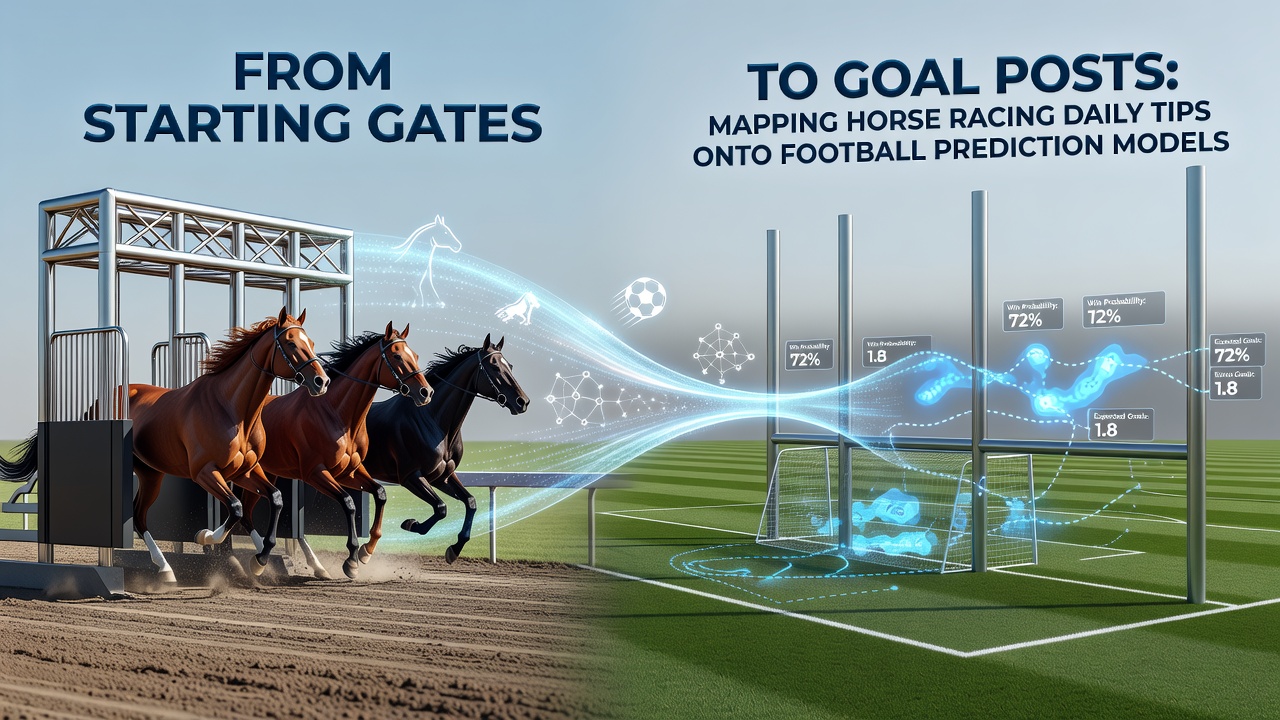
Practitioners outline a sequence of steps when adapting racing tips for football use. Initial filtering applies the same consistency checks used on equine runners, such as recent performance trends, to team form lines. Subsequent layers introduce probability weighting drawn from both domains, for instance converting a horse's sectional times into an analogue for a side's pressing intensity. Reports compiled by the Asia Pacific Association of Gaming Regulators illustrate how operators in multiple jurisdictions have begun offering dedicated tools that facilitate these mappings, with user interfaces displaying dual-sport probability matrices. Those who utilise such systems often monitor live updates from both racing results and in-play football data to refine selections before finalising accumulator lines.
Additional layers incorporate external variables such as travel fatigue for horses and fixture congestion for football squads, creating a unified risk assessment. Research indicates that when these factors receive equal weighting, the resulting accumulator structures exhibit different volatility profiles compared with single-sport builds. September 2026 data further suggest that participants who balanced selections across both sports encountered fewer extreme swings in daily returns during high-volume betting windows.
Conclusion
Evidence from regulatory bodies, academic studies, and industry associations continues to map out how daily horse racing tips integrate into football prediction workflows for multi-bet constructions. Patterns observed in September 2026 and prior overlapping seasons demonstrate measurable activity in these hybrid approaches, supported by statistical frameworks that draw parallels between equine performance indicators and soccer outcome probabilities. The ongoing availability of cross-referenced datasets allows continued examination of these methods across different markets and regulatory environments.